
Introduction: The Red Badge of Inefficiency 🔴
In the world of Indonesian logistics, few phrases strike as much fear into the hearts of supply chain managers as “Jalur Merah” (the Red Channel). 😰 As we operate in the high-stakes trade environment of 2026, the Red Channel remains the primary bottleneck that can turn a profitable import cycle into a logistical and financial nightmare. 📉 When your container is flagged for a physical inspection, you aren’t just losing time at ports like Tanjung Priok or Belawan; you are losing market share, customer trust, and hard-earned capital to mounting storage fees. 💸
However, getting flagged for the Red Channel is rarely a case of “bad luck.” 🎲 In the age of digital customs, it is almost always the result of a data discrepancy—most notably, an incorrect HS Code (Harmonized System Code) classification. 🔢 At M2B Logistics, we believe that the best way to handle a customs inspection is to prevent the need for one through data-driven precision. 🛡️ This ultimate guide explores how you can leverage technology and compliance strategy to ensure your cargo stays in the fast-moving Green Channel. 🍏
What Exactly is the “Red Channel”? 👮♂️
The Indonesian Directorate General of Customs and Excise (DJBC) uses a sophisticated Risk Management System (CEISA) to determine the inspection level of every shipment. 🖥️ The Red Channel is the highest level of scrutiny, requiring a full physical examination of the goods and a detailed audit of all accompanying documents. 🔍 While the government’s goal is to prevent illegal trade and ensure correct revenue collection, for a compliant business, it feels like an unnecessary hurdle that adds 3 to 7 days to the lead time. ⏳
In contrast, the Green Channel allows for immediate release after the tax payment is verified, while the Yellow Channel only requires a documentary review. 📄 Moving from Red to Green isn’t about “knowing someone” at the port; it’s about having a “Clean Data Profile.” 🧼 Every document submission is a data point that builds your corporate reputation in the eyes of the government. 🇮🇩
The HS Code Trap: Why Classification Errors Trigger Alarms 🚨
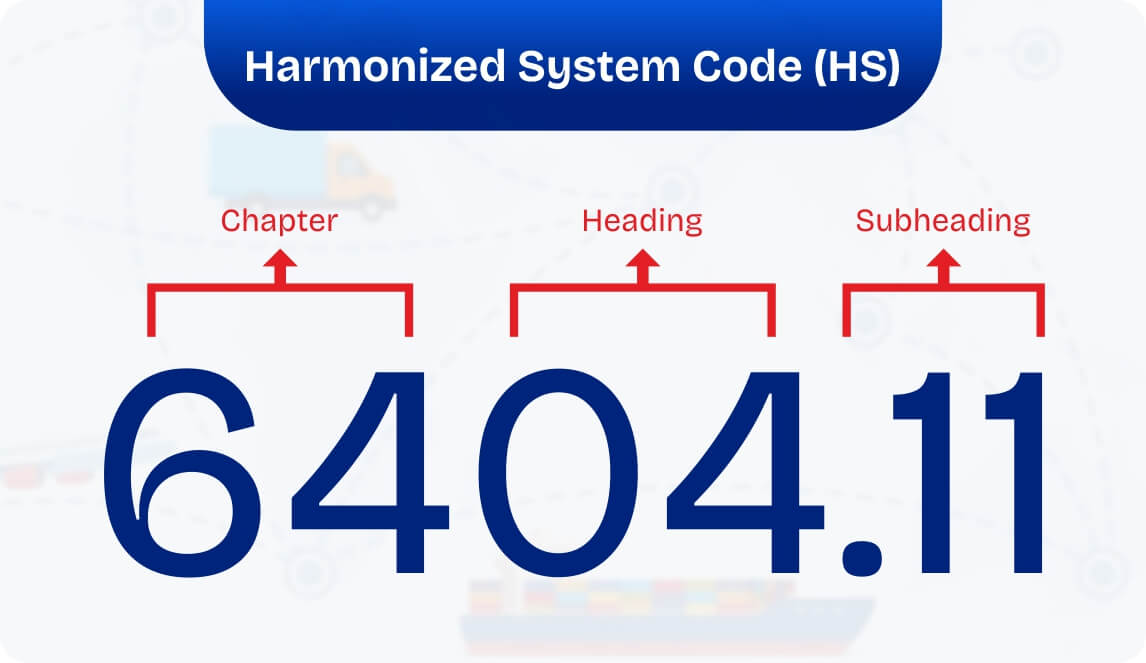
The HS Code is the universal language of trade, but it is also a complex maze with over 10,000 possibilities in the BTKI (Buku Tarif Kepabeanan Indonesia). 📚 When an importer misclassifies a product—whether by accident or to attempt a lower tax rate—the system’s red flags are immediately raised. 🚩 A discrepancy between the product description on the invoice and the technical requirements of the HS Code is the #1 trigger for a physical inspection. 🛑
For example, misclassifying a “smart industrial valve” as a “simple mechanical part” might save 5% in duties on paper, but if caught during a Red Channel inspection, it results in a 100% penalty on the underpaid duty and potentially a “Block” on your import license. 🚫 In 2026, customs authorities are using AI to cross-reference global price databases; if your declared value for a specific HS Code is significantly lower than the global average, you are guaranteed a spot in the Red Channel. 🤖
Local Context: DJBC’s Digital Transformation and NLE 🇮🇩
Indonesia is making massive strides in streamlining trade through the National Logistics Ecosystem (NLE). 🏗️ According to local reports from Kemenkeu.go.id, the NLE integration has already begun to significantly reduce logistics costs as a percentage of GDP. 📈 However, this “Digital Highway” is only open to those with high compliance scores. 🏆 The government is increasingly rewarding “Low-Risk Importers” with pre-clearance facilities and automated Green Channel status. 🟢
Furthermore, recent news from Bisnis.com highlights that DJBC is tightening supervision on “Lartas” (Prohibited and Restricted) goods. 👮♂️ If your HS Code falls under a restricted category and you don’t have the necessary technical permits from the Ministry of Trade or BPOM, your cargo will not only be Red Channeled but could also be re-exported or destroyed. 🌋 Staying ahead of these local regulatory shifts is essential for business continuity. 🛡️
International Perspective: The WCO and Global Compliance Standards 🌏
On the global stage, the World Customs Organization (WCO) is pushing for the “Smart Borders” initiative. 🌍 As reported by World Customs Organization news, the focus is now on data-sharing between nations to prevent “Mis-invoicing.” 📊 This means that the data you submit in Indonesia is often cross-checked with the export data submitted in the country of origin, such as China, Europe, or the USA. 🇺🇸🇨🇳🇪🇺
If there is a “Mirror Trade Gap”—where the export value from China doesn’t match the import value in Indonesia—the AI-driven systems flag the transaction for a Red Channel audit. 🔍 This international transparency mandate means that “Creative Accounting” is no longer a viable strategy. 📉 The only way to thrive in 2026 is through Radical Transparency and hyper-accurate HS Code mapping based on technical specifications, not just “common names.” 🔬
5 Strategic Steps to Stay in the Green Channel 🛤️
How do you build a supply chain that is “Red Channel Proof”? 🛡️ It requires a shift from reactive document handling to proactive data management:
1. Conduct a Technical Pre-Classification Audit 🔬
Never guess your HS Code based on what your supplier says. 🙅♂️ Suppliers often use codes that are valid in their country but different in the BTKI 2022. 🇮🇩 Always request a technical specification sheet and an MSDS (Material Safety Data Sheet) if applicable. 🧪 Use these to verify the classification against local regulations before the ship even leaves the origin port. 🚢
2. Leverage AI-Driven Classification Tools 🤖
In 2026, manual searching through 1,000 pages of the BTKI is inefficient. 🕰️ At M2B Logistics, our portal offers an AI-Assisted HS Code Explorer. 🔢 This tool analyzes your product data and provides the most accurate classification based on recent customs rulings. 🎯 Technology removes the “grey area” and gives you the confidence to submit your declaration without fear. 💻
3. Maintain Consistency Across the “Holy Trinity” of Documents 📄
The Invoice, Packing List, and Bill of Lading must tell the exact same story. 📖 Any variance in net weight, gross weight, or item count is a Red Channel trigger. 🚨 A digital portal—like the one we provide—allows you to upload and cross-verify these documents in a single environment, catching errors before they reach a customs officer’s desk. 🖥️
4. Apply for a Private Customs Ruling (Pre-Classification) 🏛️
If you are importing a new or technically complex product, you can apply for a formal ruling from the DJBC. ⚖️ Once issued, this ruling is legally binding, effectively “Immunizing” you from Red Channel flags regarding that specific HS Code. 💉 While it takes time to process, it is a powerful long-term asset for industrial importers. 🏗️
5. Monitor Your Importer Risk Profile (NPP) 📊
Customs assigns a risk score to every company. 📋 Every mistake, delay, or penalty lowers your score and increases your chances of being Red Channeled in the future. 📉 Use a partner like M2B Logistics that focuses on “Compliance First.” 🤝 By maintaining a clean record, you eventually graduate to “AEO” (Authorized Economic Operator) or “MITA” status, where your cargo is almost never inspected. 🎖️
The Financial Impact: Avoiding the Demurrage Trap 💸
A Red Channel inspection is expensive. 💰 Beyond the labor cost of stripping a container, you face Demurrage (port storage) and Detention (container usage) fees that can exceed $200 per day per container. 😱 If you have 10 containers stuck for a week, you are looking at a $14,000 “efficiency tax” that goes straight to the port operator, not your bottom line. 💸
By investing in data accuracy and using a digital-first forwarder, you are essentially buying “Logistics Insurance.” 🛡️ The cost of using a premium partner like M2B is a fraction of the cost of a single Red Channel nightmare. 📉 In 2026, the most successful importers are those who understand that “Cheap Forwarding” is often the most expensive mistake a company can make. 🚫
M2B Logistics: Your Shield Against Customs Disruptions 🛡️
At M2B Logistics, we don’t just “clear” cargo; we De-Risk it. 🛡️ Our entire operational workflow is designed to maximize your chances of a Green Channel release. 🍏 We combine the expertise of veteran customs brokers with the speed of modern AI tools. ⚡
Our specialized “Anti-Red Channel” features include:
- Digital Document Pre-Audit: We catch discrepancies before submission. 🔍
- HS Code Advisory: Expert mapping for complex industrial and tech goods. 🔢
- NLE-Ready Integration: Direct data flow into the national ecosystem for speed. 🇮🇩
- Customs Calculator: Integrated with live Kemenkeu rates for 100% tax accuracy. 🧾
📥 Protect Your Profit Margins Today
Don’t let your cargo become a statistic in the port’s Red Channel backlog. 🕰️ Take control of your compliance and scale your business with confidence in the 2026 trade era. 🚀
👉 Download the Full M2B Company Profile & Compliance Capabilities Here
🚀 TIRED OF RED CHANNEL DELAYS?
Are your shipments frequently flagged for inspection? 😰 Let the experts at M2B Logistics conduct a “Customs Compliance Audit” of your historical data. 🔍 We will identify the triggers and implement a strategy to move your shipments back to the Green Channel. 🍏
👉 CONSULT WITH OUR COMPLIANCE EXPERTS ON WHATSAPP
Pro-Tip: Mention code “GREEN-LANE-2026” to receive a free “HS Code Sensitivity Report” for your top 5 products! 📈
M2B Logistics — Intelligent Freight. Total Compliance. Your Partner in Avoiding the Red Channel. 🇮🇩🌎