
Exporting to Indonesia’s thriving market of over 270 million consumers presents incredible opportunities. But choosing between air and sea freight can make or break your logistics strategy. The wrong choice could mean missed delivery deadlines, inflated costs, or damaged goods.
Let’s break down everything you need to know to make the smartest shipping decision for your Indonesia-bound exports.
Understanding Indonesia’s Import Landscape
Indonesia, Southeast Asia’s largest economy, continues to show robust import growth across sectors including electronics, machinery, textiles, and consumer goods. With major ports in Jakarta, Surabaya, and Medan, plus international airports in key cities, the country offers diverse entry points for your cargo.
However, navigating Indonesia’s customs regulations, varying lead times, and cost structures requires strategic planning—starting with choosing the right freight mode.
Air Freight to Indonesia: Speed Meets Premium
When Air Freight Makes Sense
Best for:
- High-value, low-volume shipments
- Time-sensitive goods (perishables, fashion items, urgent spare parts)
- Products with short shelf life
- Emergency orders and critical inventory replenishment
- Electronics and tech products requiring quick market entry
Advantages of Air Freight
Lightning-Fast Transit Times
Air freight to Indonesia typically takes 3-7 days door-to-door, compared to 20-40 days for sea freight. This speed is invaluable when you’re launching new products, responding to urgent demand, or dealing with perishable goods.
Enhanced Security
With fewer handling points and shorter transit times, air freight reduces the risk of theft, damage, or loss. This matters when shipping high-value electronics, pharmaceuticals, or luxury goods.
Predictable Scheduling
Daily flights to major Indonesian airports mean more flexibility and reliable departure times. Less chance of delays compared to vessel schedules.
Lower Insurance Costs
Reduced transit time and better security often translate to lower insurance premiums for your valuable cargo.
Air Freight Challenges
Premium Pricing
Air freight costs can be 5-10 times higher than sea freight per kilogram. This makes it prohibitive for heavy or bulky items.
Weight and Size Restrictions
Aircraft have strict dimensional and weight limitations that may not accommodate larger machinery or oversized cargo.
Environmental Impact
Air freight generates significantly higher carbon emissions—a consideration for companies with sustainability commitments.
Need Expert Guidance on Your Indonesia Shipping Strategy?
Our logistics specialists have helped hundreds of exporters optimize their freight solutions to Indonesia. Whether you’re shipping tech products from China or machinery from Europe, we’ll find the most cost-effective and reliable route for your cargo.
📧 Email: info@m2b.co.id
🌐 Website: m2b.co.id
💬 WhatsApp: +62 812-6302-7818
Get your free shipping consultation today!
Sea Freight to Indonesia: Economy Meets Capacity
When Sea Freight Makes Sense
Best for:
- Large volume shipments
- Heavy machinery and equipment
- Non-urgent cargo
- Cost-sensitive products with healthy profit margins
- Bulky items (furniture, vehicles, construction materials)
- Regular, scheduled shipments
Advantages of Sea Freight
Unbeatable Cost Efficiency
For heavy or voluminous cargo, sea freight offers dramatic cost savings. A 40-foot container can carry 20-28 tons at a fraction of air freight costs per kilogram.
Massive Capacity
No restrictions on cargo size or weight. You can ship anything from a single pallet (LCL – Less than Container Load) to full containers (FCL – Full Container Load) or even out-of-gauge cargo.
Eco-Friendly Option
Sea freight produces approximately 30 times less CO2 emissions per ton compared to air freight—ideal for meeting sustainability goals.
Versatile Options
Choose between FCL for large shipments, LCL for smaller volumes, or specialized vessels for vehicles, refrigerated goods (reefer containers), or oversized equipment.
Sea Freight Challenges
Extended Transit Times
Expect 20-40 days depending on origin. From China it’s typically 7-14 days, from Europe 25-35 days, and from the US West Coast 18-25 days.
Port Congestion Risks
Major Indonesian ports can experience delays during peak seasons, adding unpredictability to your supply chain.
Higher Inventory Carrying Costs
Longer transit means more capital tied up in goods in-transit and potentially higher warehousing needs.
Complex Documentation
Sea freight involves more paperwork, customs procedures, and potential demurrage charges if containers aren’t cleared promptly.
Key Comparison Factors: Making Your Decision
1. Cost Analysis
Air Freight: $4-8 per kg (varies by route and volume)
Sea Freight: $100-300 per cubic meter or $1,500-3,000 per 20ft container
Break-even calculation: Generally, if your shipment exceeds 200-300 kg and isn’t time-critical, sea freight becomes more economical.
2. Transit Time Requirements
- Ultra-urgent (1-5 days): Air freight only
- Fast (5-15 days): Air freight or express sea options
- Standard (15-30 days): Sea freight
- Economy (30-45 days): Standard sea freight
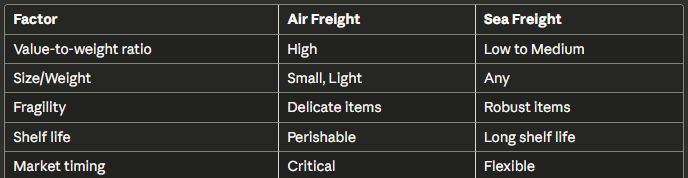
3. Product Characteristics
4. Destination Considerations
Air Freight Access: Jakarta (CGK), Surabaya (SUB), Medan (KNO), Denpasar (DPS), Makassar (UPG)
Major Sea Ports: Tanjung Priok (Jakarta), Tanjung Perak (Surabaya), Belawan (Medan), Makassar, Semarang
Consider final delivery location—sea freight to a major port plus inland transport might still be faster and cheaper than air freight to a distant city.
Hybrid Strategy: The Best of Both Worlds
Smart exporters often use a mixed approach:
Initial Shipment: Air freight to test the market quickly and meet immediate demand
Restocking Orders: Sea freight for cost-effective regular replenishment once demand is validated
Emergency Top-ups: Air freight for urgent restocking when sea shipments are in transit
Seasonal Planning: Sea freight for pre-positioning inventory before peak seasons, air freight for reactive orders
Indonesia-Specific Considerations
Customs and Regulations
Indonesia’s customs clearance requires careful documentation regardless of freight mode. Key requirements include:
- Commercial invoice
- Packing list
- Bill of lading (sea) or airway bill (air)
- Certificate of origin
- Import licenses (for restricted goods)
- Product certifications (SNI, Halal, etc. where applicable)
Processing times: Air shipments typically clear customs in 2-4 days, while sea shipments may take 3-7 days depending on complexity.
Insurance Recommendations
For air freight, cargo insurance typically costs 0.2-0.5% of cargo value. For sea freight, expect 0.3-0.6% due to longer exposure time and higher risk factors.
Incoterms Impact
Your chosen Incoterm (FOB, CIF, DDP, etc.) significantly affects cost and responsibility. Most Indonesia importers prefer FOB or CIF terms, where the seller arranges main carriage.
Ready to Ship to Indonesia? Let’s Optimize Your Logistics
Choosing between air and sea freight shouldn’t be guesswork. At M2B, we provide tailored logistics solutions that balance speed, cost, and reliability for your specific needs.
✅ Multi-modal shipping expertise
✅ Customs clearance support
✅ Door-to-door service to anywhere in Indonesia
✅ Real-time tracking and updates
✅ Competitive rates from trusted carriers
Contact our Indonesia logistics specialists today:
📧 Email: info@m2b.co.id
🌐 Website: m2b.co.id
💬 WhatsApp: +62 812-6302-7818
Request a quote and get expert advice on the best shipping solution for your business. Fast response guaranteed!
Final Verdict: Which Should You Choose?
There’s no one-size-fits-all answer. The optimal freight mode depends on your unique situation:
Choose Air Freight if:
- Time-to-market is critical
- Product value justifies premium shipping costs
- Shipment weight is under 500 kg
- You’re testing a new market
- Product is perishable or time-sensitive
Choose Sea Freight if:
- Cost optimization is priority
- You’re shipping bulk or heavy items
- Lead times are manageable
- Regular, predictable shipments
- Building inventory over time
Consider Both if:
- You have varying urgency levels
- Running promotional campaigns
- Managing seasonal fluctuations
- Balancing cash flow and inventory needs
The most successful exporters to Indonesia don’t just choose one mode—they build flexible logistics strategies that leverage both options strategically.
Your Next Step
Understanding freight modes is just the beginning. The real challenge lies in execution: finding reliable carriers, navigating Indonesian regulations, managing documentation, and ensuring on-time delivery.
That’s where experienced logistics partners become invaluable. With local expertise, established carrier relationships, and end-to-end visibility, you can focus on growing your Indonesian market while leaving the shipping complexities to specialists.
Start shipping smarter to Indonesia. Contact M2B today for a personalized logistics consultation.
📧 info@m2b.co.id | 🌐 m2b.co.id | 💬 +62 812-6302-7818